
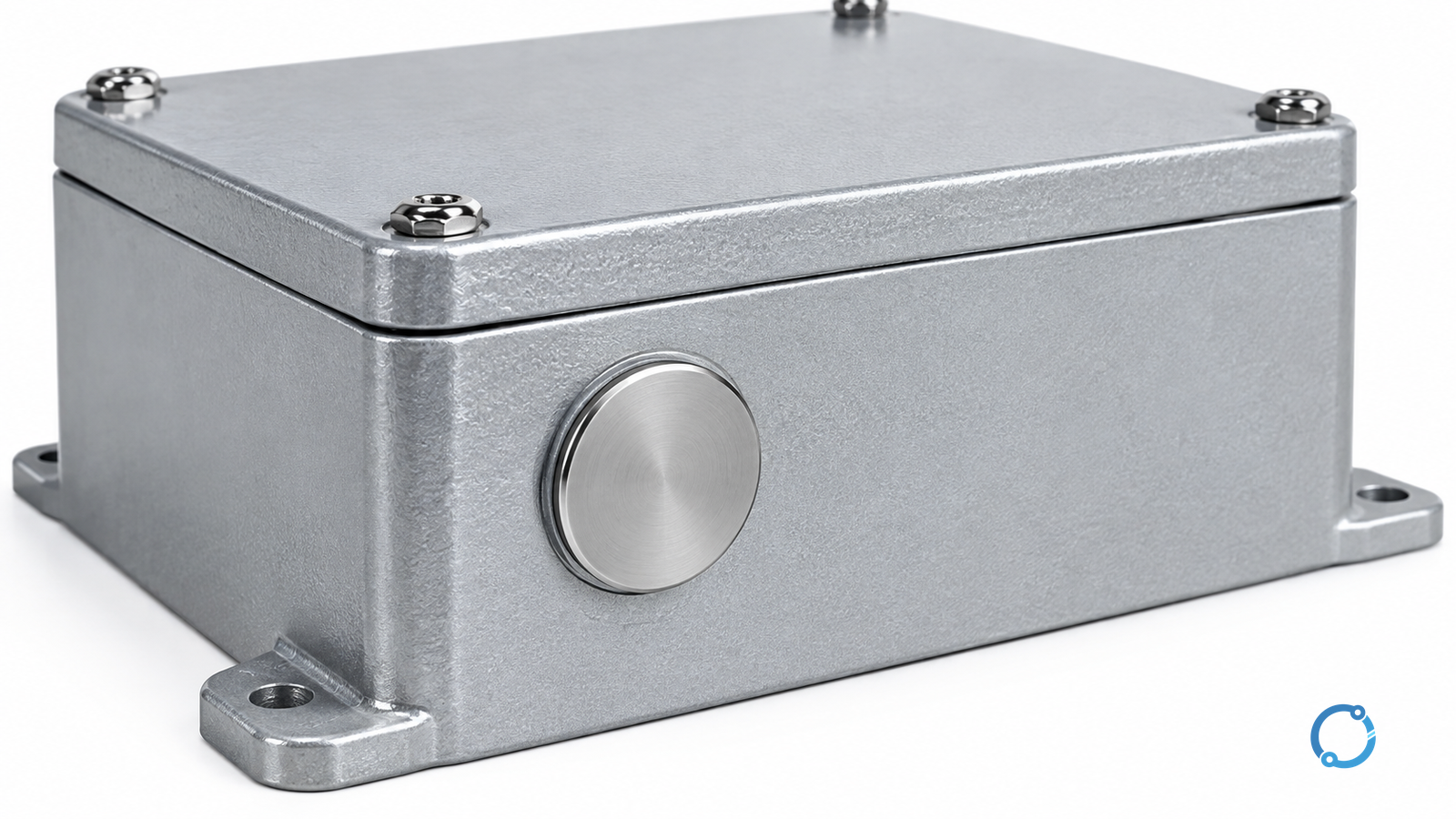
An Ex stopping plug is selected to close an unused opening in a particular enclosure while preserving the required protection. Choose it by the entry interface, protection concept, documented configuration and environment—not by metal type or an “explosion-proof” label alone.
This article addresses qualified selection and acceptance of unused entries in IEC-based Ex equipment. It does not provide a universal thread-engagement length, torque value or repair method. An unidentified opening or damaged enclosure is a hold condition, not an invitation to fit whichever plug seems tight.
Start with the opening, not a material preference
Record the enclosure identity and the exact opening to be closed. Establish its thread form and size, the relevant protection concept and any documented limitations on accessories.
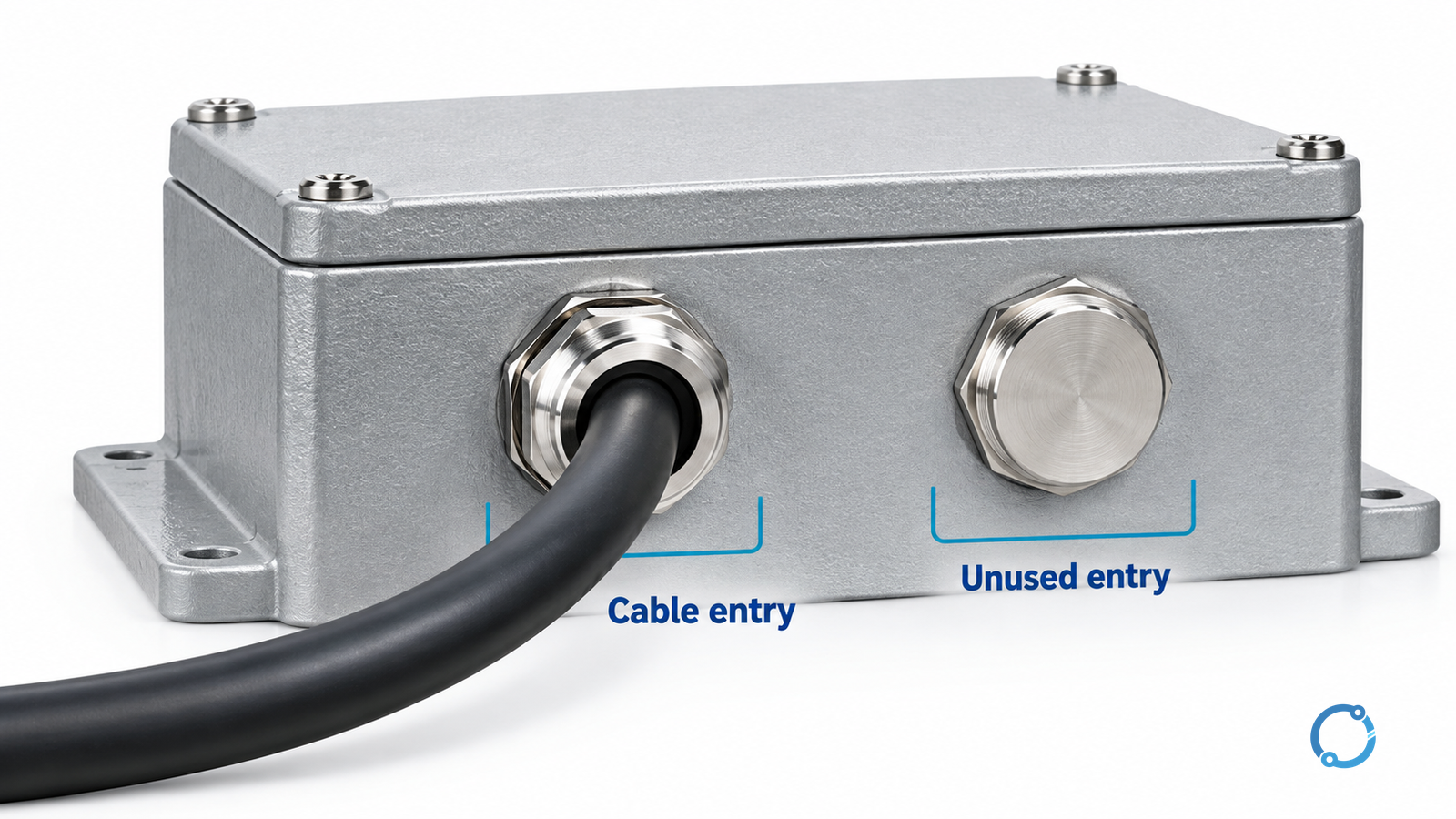
An occupied cable entry and an unused opening complete different engineering tasks. The former needs a supported cable-entry arrangement; the latter needs a supported closure. A transit cap supplied for shipping should not be assumed to perform the service function of an accepted stopping plug.
Resolve hazardous-area equipment suitability before selecting the closure. The existing ATEX lighting zones guide explains that prerequisite without making every enclosure accessory interchangeable.
Use an unused-entry acceptance matrix
This proposed matrix is a practical review aid, not a standards table.
| Acceptance dimension | Evidence to obtain | Why a shortcut fails |
|---|---|---|
| Enclosure identity | Applicable documents for the exact enclosure | A generic family description can omit entry conditions |
| Protection concept | Compatible closure arrangement under the equipment basis | “Ex” is not one universal construction |
| Thread interface | Correct form, size and permitted engagement arrangement | Similar diameter is not full compatibility |
| Plug identity | Exact variant and applicable certification/documentation | A different material or style may be a different configuration |
| Sealing arrangement | Permitted seal, washer or accessory combination | Adding a seal can alter the accepted interface |
| Exposure and access | Material/finish evidence, chemicals and removal provisions | Harder metal does not answer every service condition |
| Installed acceptance | Competent inspection and configuration record | A purchase certificate does not inspect the fitted closure |
The most important distinction is between a part description and an accepted installed combination. A procurement line such as “stainless Ex plug” leaves too many of these dimensions undefined.
Treat material as one conditional input
Metal choice should follow the enclosure interface and exposure assessment. Include the base material, finish, contact with surrounding materials, chemical exposure and the maintainability of the installed closure. Do not rank stainless steel, brass or other materials without those conditions.
A material change can also change the supplied variant. Check its supporting documents rather than treating it as a cosmetic substitute. A finish described as corrosion-resistant is not evidence of a particular service life in every environment.
Avoid assigning a universal requirement for thread compounds, sealing tapes, grease or washers. Their acceptability depends on the protection arrangement and instructions. A substance that appears to improve weather sealing may not be permitted for the assessed interface.
Likewise, adding an adapter should trigger review of the complete arrangement. Do not use multiple accessories simply to rescue a plug selected before the opening was identified.
Read certification evidence at the right level
IECEx’s equipment-scheme overview distinguishes equipment certification from component certification. That distinction matters when reviewing an accessory: documentation for a component must not be interpreted as approval for any finished installation.
Match the actual plug identity, variant and conditions to the intended enclosure use. Where supporting documents impose limitations, retain them in the selection record and close them through the applicable assembly review. Do not replace this step with a photograph of a mark.
The public scope of IEC 60079-14:2024 includes Ex installation design, selection and initial inspection. It does not supply this article with a universal plug specification. The adopted edition and the equipment documentation must establish the actual requirements.
Separate ingress protection from explosion protection
A closure must preserve all relevant functions, not just the one that is easiest to demonstrate. The IEC 60529 catalogue identifies the IP Code as an enclosure-protection classification. An IP claim is not, by itself, evidence of an Ex protection arrangement.
If weather or washdown resistance is required, retain evidence for the complete permitted sealing arrangement. Do not infer the installed enclosure’s protection solely from the isolated plug’s catalogue rating.
The reverse shortcut also fails: acceptable Ex documentation does not automatically answer every environmental exposure. Record the service conditions separately and establish what evidence covers them.
For example, suppose a replacement plug has the same nominal size but requires a different sealing accessory. That is a hypothetical configuration change, not a proven failure. Reopen the interface and ingress-protection checks; do not assume that matching size preserves the previous acceptance.
Close the record before returning equipment to service
Inspection and physical work belong to competent personnel under the site’s hazardous-area work, isolation and permit procedures. Do not remove a stopping plug to identify a thread during ordinary energized service.
Missing documentation, uncertain thread identity, damaged threads, unauthorized enclosure alterations or a mismatched supplied variant should stop routine acceptance. A plug cannot be used to conceal an unresolved enclosure defect. Obtain the appropriate engineering or repair assessment instead.
The final record should identify the unused opening, plug, any permitted accessories, relevant documents and installed inspection. It should also distinguish the closure from temporary transport protection or a future spare-entry plan.
The completed outcome is a traceable unused-entry closure for the actual enclosure and exposure. Material preference is useful only within that accepted interface.