
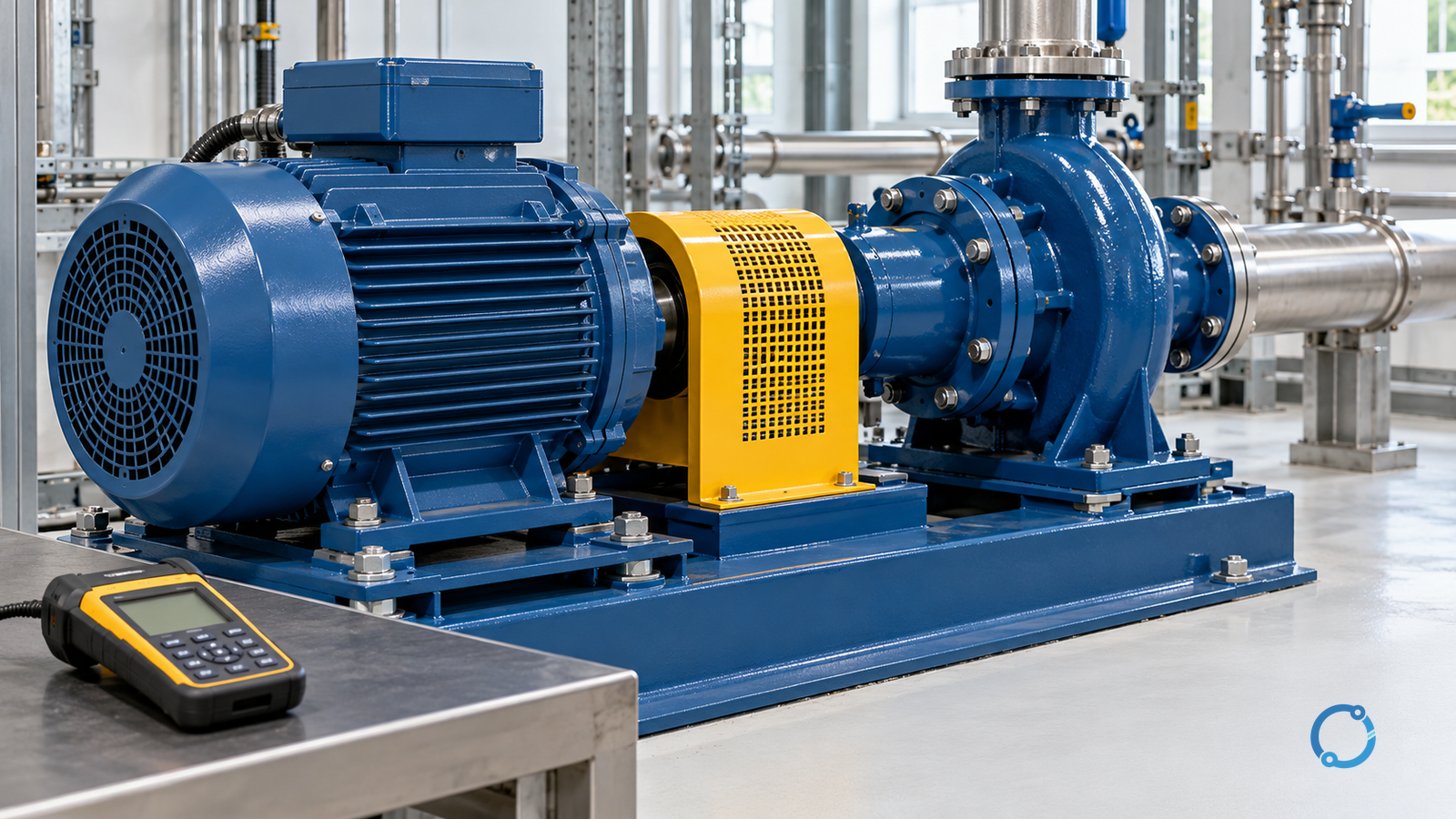
An unfamiliar motor noise is a reason to investigate, not proof that a bearing has failed. A fan, coupling, driven machine, loose mounting or electrical operating condition can all contribute. Record when the sound occurs, protect people from the hazard, and compare evidence from the whole motor-driven system before deciding on a repair.
Stop and escalate through the site’s procedure when noise changes suddenly or accompanies severe vibration, smoke, visible damage, abnormal heat or a protection operation. Do not keep restarting a machine to reproduce the sound. The responsible operator and maintenance team decide whether continued operation is acceptable for the actual asset and consequences of failure.
Establish a safe observation boundary
Observe from an approved location with guards in place. No sound check justifies reaching across a rotating shaft, removing a guard or approaching exposed electrical parts. Hearing protection and observation distance follow the site’s noise assessment; a phone recording is not a substitute for an exposure assessment or calibrated measurement.
Before inspection, adjustment, coupling work or other servicing, authorized personnel use the site’s energy-control procedure. Identify electrical supplies, automatic restart, drive DC-link energy, gravity, pressure, rotating inertia and other stored energy. Isolate, secure and verify the relevant sources according to the equipment and site procedure. Electrical absence-of-voltage testing requires suitable equipment and qualified personnel under the applicable rules. Restore guards and follow the formal release process before operation.
In the United States, OSHA’s hazardous-energy standard applies to covered general-industry servicing and maintenance; its scope and exceptions matter. Other electrical and machine-guarding rules may also apply. This article does not authorize energized troubleshooting or replace local procedures.
First record the conditions
The best first question is not “what component makes this sound?” but “what changed when the sound appeared?” Record the asset identifier and date, then describe the sound in ordinary terms: hum, whine, rattle, scrape, hiss or repeated impact. Note whether it is new, intermittent or progressive. Those words guide a hypothesis; they are not a diagnosis.
Capture, if safely available:
- whether the sound appears at start, steady operation, speed change, coast-down or stop;
- operating speed, load, direction and relevant process conditions;
- whether the motor runs from the supply directly or from a variable-frequency drive;
- recent maintenance, bearing work, alignment, base repairs, process changes or trips;
- trend data for vibration, temperature, current and alarms, including measurement position and operating state;
- whether a comparable healthy baseline exists and how it was obtained.
A recording can document timing, but microphone location, distance, room reflections, automatic gain and background machinery alter it. Do not compare two recordings as calibrated sound levels without a suitable measurement method.
Map the possible source before choosing a repair
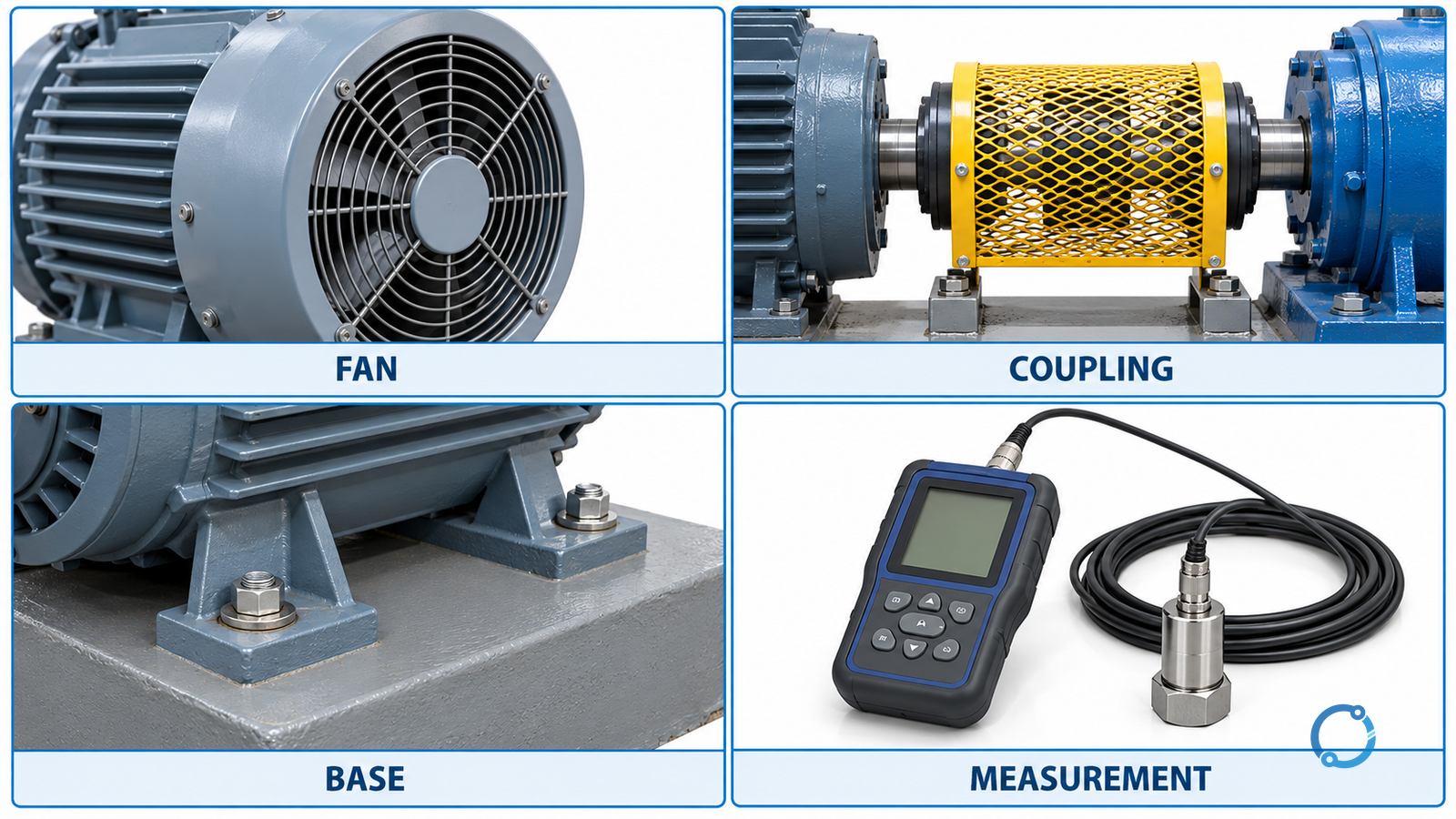
| Observation | Plausible contributors | Evidence that helps distinguish them | Safe next decision |
|---|---|---|---|
| New rattle or intermittent contact | Loose guard, fastener or nearby component; contact elsewhere in the machine | Change with operating condition; physical evidence after isolation | Assess urgency, isolate and inspect rather than reaching toward moving parts. |
| Rough or repeating mechanical sound | Bearing, coupling, driven load, alignment or another rotating component | Vibration trend, load and speed context, inspection findings | Escalate for competent condition assessment; do not replace a bearing solely by ear. |
| Whine changing with speed | Fan, drive-related sound, resonance or driven equipment | Relationship to commanded speed and process condition; approved measurements | Review speed profile and consult the drive and machine documentation. |
| Hum associated with electrical operation | Normal magnetic sound, supply or load condition, or a fault | Electrical records and qualified measurements, corroborated by mechanical evidence | Have qualified personnel assess under a defined test plan. |
| Airflow-like hiss or scrape | Fan, guard, obstruction or another air system | Safely observed location and condition after isolation | Check the full cooling path and nearby process equipment. |
Several causes can coexist. A loose base can change the sound of a healthy motor, while a coupling issue can overload a bearing. The U.S. Department of Energy motor-system guide identifies unusual noise and vibration among possible indications for investigating alignment; these signs do not independently establish misalignment.
Separate the motor from its surroundings in the evidence
The sound may radiate from a guard or base even when excitation originates elsewhere. Check the asset boundary: motor, coupling, gearbox, pump or fan, piping and mounting structure. Listen only from a permitted safe location, and compare normal operating records with the new condition. If a change followed maintenance, compare the completed work and configuration with the approved records without assuming the work caused the problem.
An uncoupled test can sometimes help distinguish motor behavior from the driven machine, but it is a controlled maintenance activity, not a simple listening trick. It requires an approved procedure, mechanical isolation, appropriate coupling and guarding arrangements, and review of the motor’s permitted no-load operation. Do not disconnect a load or defeat guards merely to run this test. The team may obtain the needed evidence from existing trends or other non-invasive checks instead.
Bearings, lubrication and alignment
Bearing damage, inadequate or unsuitable lubrication, contamination and excessive mechanical loading can affect noise and vibration. The sound character alone cannot tell which condition exists or how much life remains. An apparent bearing symptom may originate in misalignment, belt tension, load, mounting, electrical currents or another upstream cause. Replacing the bearing without investigating the loading and environment can leave the cause unresolved.
Review the bearing type, maintenance history and lubricant specification. Avoid adding grease as an immediate universal response: type, quantity and procedure depend on the equipment, and inappropriate lubrication can create new problems. Inspection and any lubrication work must follow the machine procedure after hazards are controlled.
Alignment is a measurement, not an inference from a noisy coupling. Record the alignment method and relevant conditions; check the machine’s required tolerances and thermal considerations. Loose feet, distortion and connected piping can complicate the result. Where the noise coincides with increased temperature, use the motor operating-temperature guide to assess load and cooling as well.
Fan, guard and airflow
A fan or surrounding cover can radiate a whine, rattle or scraping sound. A changed cooling path, debris or contact between parts is one hypothesis. The OSHA noise-prevention training material lists loose parts and airway obstructions among potential contributors to machine noise. Treat these as possibilities, not confirmation for a particular motor.
After isolation and verification, trained personnel can inspect the guard and cooling path using the applicable procedure. Do not operate with a guard removed as an informal diagnostic shortcut. Restore all protective components and confirm the cooling arrangement before an authorized return to service.
Electrical and drive-related possibilities
A hum or tonal noise may vary with supply condition, load or drive operating point. Mechanical resonance can also change as speed changes, so a speed-dependent sound is not automatically an electrical defect. A qualified electrical person should compare drive event logs, available current and voltage trends, the operating point and the manufacturer’s documentation before proposing tests.
Do not open a live terminal box or probe an energized drive solely to identify a sound. A variable-frequency drive may retain hazardous energy after supply isolation, and a coupled machine can move or back-drive the motor. Follow the site procedure and equipment instructions for isolation and verification. Where measured supply imbalance is relevant, the voltage-unbalance guide explains the measurement basis and motor effects; it does not turn a sound into a diagnosis.
Use measurements that can be compared
A vibration trend is useful only when the point, direction, sensor, mounting method, speed and load are comparable. A changing reading can indicate that further analysis is warranted, but a single overall number does not identify the failing component. A competent analyst may use frequency and phase information together with machine geometry and operating data. Choose the method and acceptance criteria for the equipment and standard actually applicable to it.
Similarly, distinguish sound pressure at a work position from sound power assigned to a machine. The IEC 60034-9:2021 publication page describes noise measurement and factory acceptance limits for specified rotating machines. It should not be treated as a universal site sound-pressure limit or a bearing-failure threshold. Site acoustics, the operating point and nearby machines affect measurements.
Use a baseline or documented acceptance criterion where available. If records disagree, preserve the raw readings and conditions rather than averaging away a meaningful transient. If no baseline exists, record the limitation and let the responsible engineer define the next suitable measurement.
Decide, repair and verify
Create a short decision record with the observed change, risk decision, evidence, alternative explanations, inspection findings and responsible owner. Select a repair only when its basis is adequate for the consequence of failure. If the evidence remains ambiguous, arrange specialist analysis or an approved inspection rather than repeatedly changing parts.
After repair, confirm the mechanical assembly, fasteners, coupling, lubrication, guards and controls in accordance with the work instructions. Authorized personnel release energy controls and return the equipment to service under the site’s procedure. Compare post-work observations and measurements with the pre-work record at comparable operating conditions; investigate any new sound or abnormal trend. The motor repair or replacement decision can help when inspection reveals damage requiring a broader decision.
Sources
- U.S. Department of Energy, Energy Management for Motor-Driven Systems, linked above.
- OSHA, Construction Noise and Hearing Loss Prevention training material, linked above; examples are diagnostic possibilities.
- OSHA, 29 CFR 1910.147, The control of hazardous energy, linked above; check scope and other applicable requirements.
- IEC, IEC 60034-9:2021, Rotating electrical machines — Noise limits, official publication page linked above.