
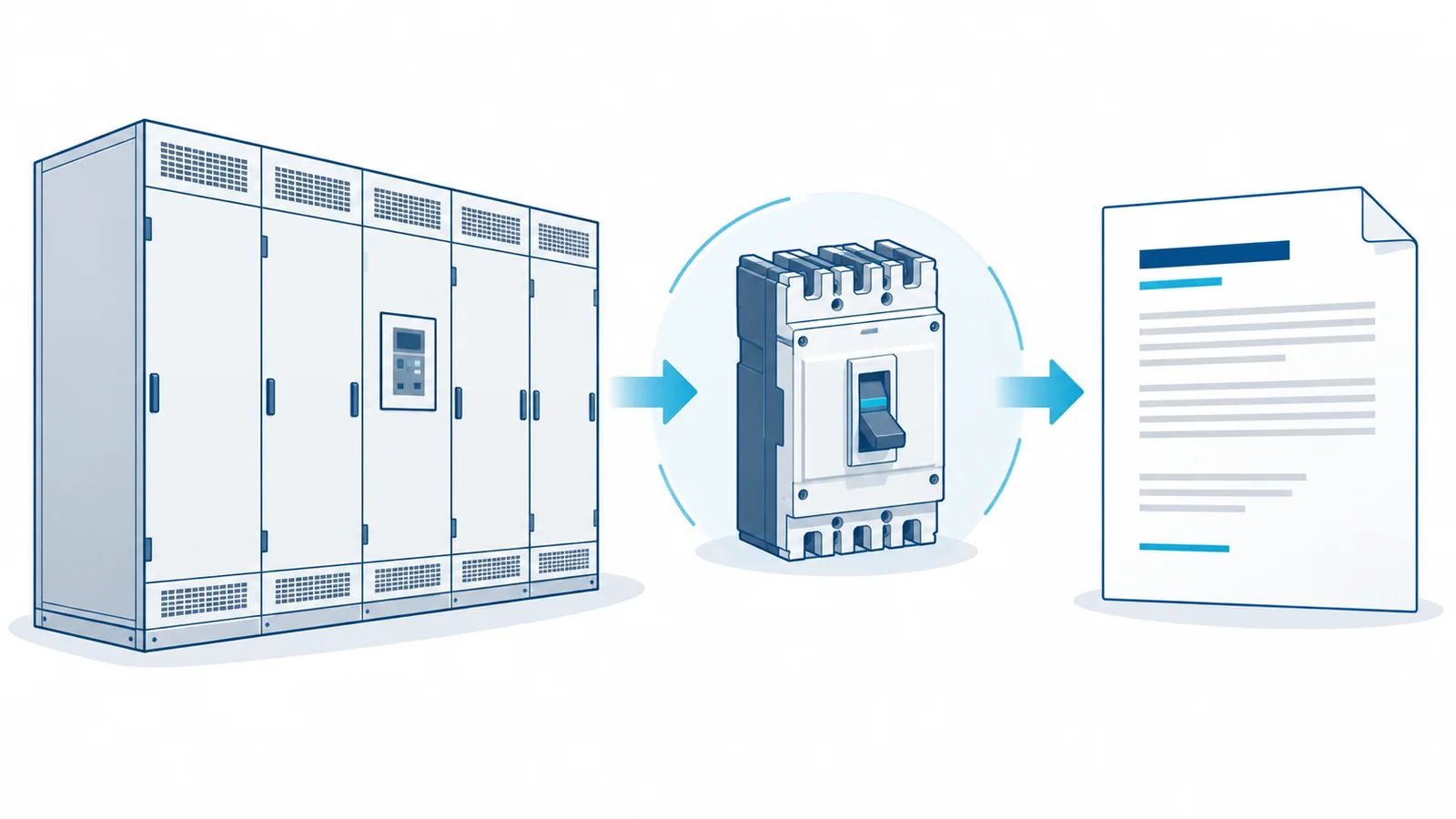
The protective device changes an arc-flash estimate primarily through the arcing current it sees and how long it takes to clear that current. A current-limiting fuse, instantaneous breaker, short-time-delay breaker or relay scheme can produce materially different clearing behavior at the same bus. But the device label does not provide a PPE category: the system configuration, fault/current model, enclosure, working distance and task-specific exposure also matter.
The IEEE 1584-2018 guide provides an analytical process for predicted incident thermal energy and arc-flash boundary for its stated three-phase AC scope (208 V to 15 kV). It explicitly does not recommend PPE. Applicable workplace-safety rules and the employer’s risk assessment govern protection. In the US electric-power context, OSHA Appendix E to 29 CFR 1910.269 explains that estimated heat energy depends on fault current, clearing time and exposure conditions.
Follow the clearing path
| Change under review | Calculation input to revisit | Why a one-line assumption fails |
|---|---|---|
| Replace an upstream fuse or breaker | Actual arcing-current response and total clearing time | “Fast” is conditional on current reaching the relevant operating region |
| Change short-time or instantaneous setting | Time-current curve at calculated arcing current, including tolerances | A lower arcing current may lie below instantaneous pickup |
| Add a maintenance-mode setting | Verified active setting and operating procedure | Normal and maintenance modes can produce different results |
| Change supply/transformer/cable | Available bolted and arcing fault current | More current can change both energy input and protective-device speed |
| Add a second source | Current contribution and which device clears | A single upstream device may not remove every contribution |
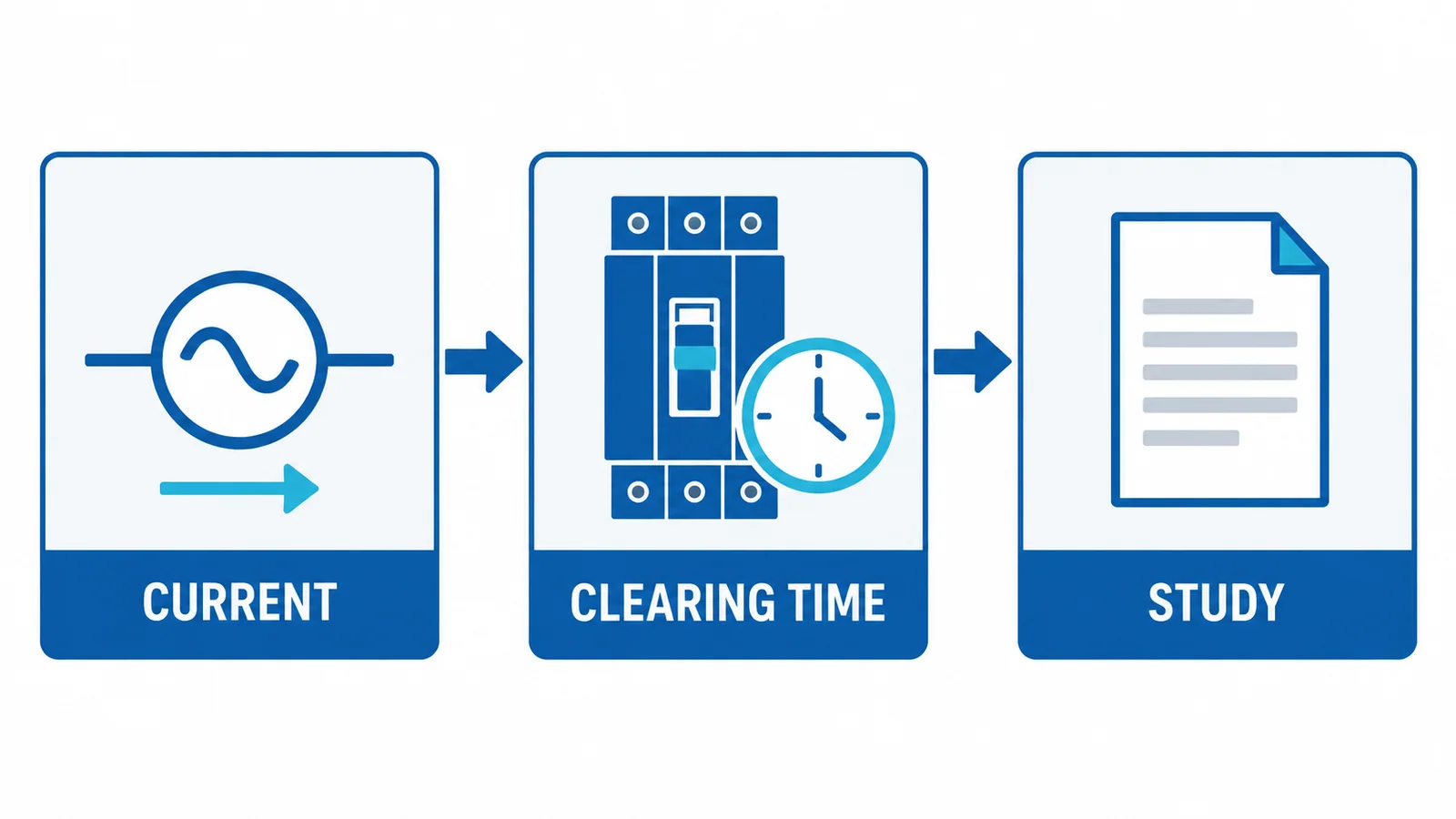
An arc-flash calculation is not simply “incident energy equals fault current times trip time.” It includes an empirical/model framework and exposure geometry. At a fixed modeled arcing condition, longer duration generally increases predicted energy; across changed protective devices or network conditions, recompute rather than scale one published number. A full study also addresses equipment configuration and working distance; this page isolates the protective-device clearing path.
PPE is a separate safety decision
An engineer can use the study to evaluate a design or setting change; an employer then applies the relevant workplace-safety framework to the task. OSHA’s arc-flash guidance emphasizes assessment and protective measures, not a technology-name shortcut. Do not downgrade arc-rated clothing because a device was marketed as current limiting, or because a new instantaneous element exists on paper. Confirm the installed device, settings, maintenance state, operating mode and study date. A protective-device change calls for review of labels and work procedures as well as the model.
The safest task may be to establish an electrically safe work condition instead of selecting higher-rated PPE for energized work. Only qualified people should perform the assessment and any permitted energized work under employer procedures and applicable law. This article provides no PPE rating, boundary or permission to work live.