
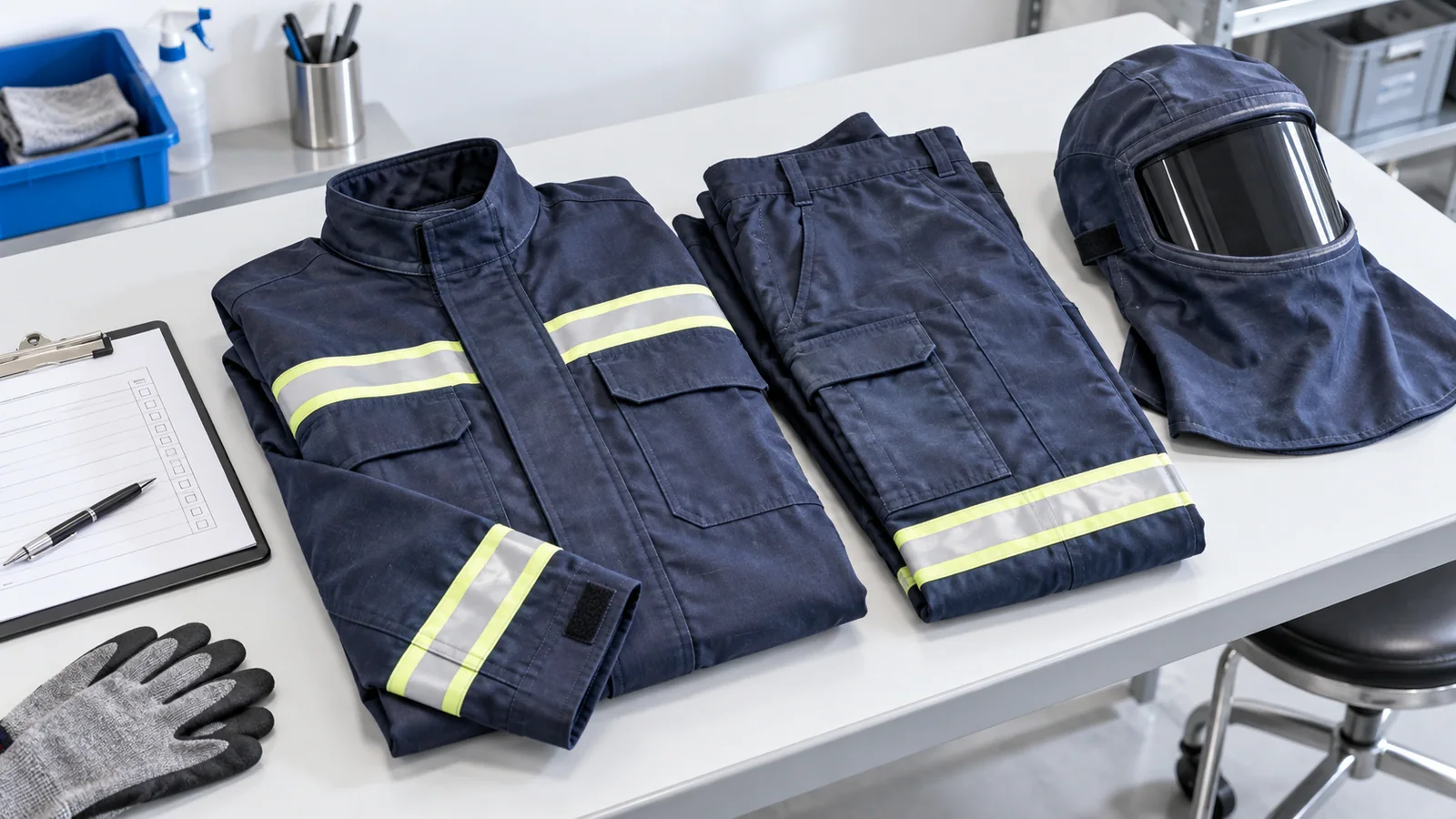
Remove arc-rated personal protective equipment (PPE) from use when it is torn, has damaged closures or seams, has lost its identification, or is contaminated with flammable substances. Clean, repair or replace it only through a method allowed by the item’s care instructions and the employer’s PPE program; inspect it before return to service. There is no universal calendar age or wash count at which every arc-rated garment must be replaced.
This guide addresses U.S. electrical-work PPE program decisions, especially arc-rated clothing. It does not select the arc rating for a task or authorize energized work. The employer’s hazard assessment and applicable procedures determine what ensemble is needed. OSHA’s arc-exposure PPE guidance says damaged flame-resistant clothing must be replaced before work requiring it and contaminated clothing must be thoroughly cleaned, if possible, or replaced. The incident-energy guide addresses why clearing time affects the selected protection level, not how to maintain garments.
Start with a pre-use inspection
Inspect the garment in good light before each use, following site policy. Check the front and back, collar, cuffs, knees, pockets, seams and closures; examine high-wear and splash-prone areas. Confirm that the arc-rating label and care instructions remain legible, the garment still covers the intended body areas, and the chosen layers match the task’s hazard assessment. A garment may look intact yet be inappropriate if its rating or identity cannot be established.
Examine related ensemble items—hood, face shield, balaclava, gloves, hard hat and footwear—under their own product instructions. Do not apply a clothing laundry rule to a visor or glove. Check for cracks, clouding, broken seals, compromised straps and missing markings. Where another standard governs a component, apply that component’s separate inspection and test program.
Decide: use, clean, repair or replace
| Finding | Immediate disposition | Return-to-service condition |
|---|---|---|
| Intact, legible, clean and suitable for task | Use under the work procedure | Normal pre-use check |
| Ordinary soil with no suspected hazardous contamination | Clean by approved label/program method | Dry, inspect and confirm identity/rating |
| Oil, grease, solvent or other flammable contamination | Remove from use; segregate | Approved cleaning demonstrably removes contamination, otherwise replace |
| Tear, hole, frayed seam, failed closure or heat damage | Remove from use | Only an authorized repair method where allowed; otherwise replace |
| Missing or illegible arc-rating/care label | Quarantine | Traceable identification restored by an authorized route; otherwise replace |
| Unknown history, unapproved alteration or incompatible cleaning | Quarantine for program review | Qualified determination with adequate records; otherwise replace |
This is an editorial triage matrix, not a substitute for a product’s instructions or a workplace procedure. The responsible safety-program owner decides uncertain cases. Do not sew a tear with ordinary thread or add an unapproved logo, patch or closure: OSHA cautions that damaged garments can require special repair techniques and common nylon thread can reduce protection.
Laundering without undermining protection
Follow the garment’s care label and the employer’s documented cleaning program. Separate routine dirt from oils, solvents and other flammable soils. A clean-looking garment is not necessarily decontaminated. ASTM F1449-20(2026) addresses industrial laundering care and maintenance, including inspection and removal-from-service considerations. ASTM F2757-20(2026) covers home-laundering programs; it does not make home washing appropriate for every workplace contaminant.
An OSHA interpretation on laundering responsibility explains that home laundering is not categorically prohibited when the employer permits it, but the employer must provide training and regular inspection. It is not a blanket permission to send chemically contaminated clothing home. If contamination cannot be reliably removed, quarantine and replace the item rather than guess.
Avoid a universal detergent or temperature recipe. Fibers, finishes, reflective trim, closures and layering systems differ; the label and approved procedure control. Keep items that need professional cleaning separate and identified so they do not re-enter circulation by accident.
Replacement is condition-based, not just age-based
Replace a garment when its protective function, identity or authorized restoration cannot be established. Repeated laundering may affect appearance and fit, but a blanket “replace after X washes” claim ignores material and care differences. Conversely, a new garment can fail inspection after one damaging event.
Program records should include item identity, rating, issue date, inspection finding, contamination type if known, cleaning or repair route, authorized decision and return/replacement date. This makes the decision traceable without pretending the record itself proves protection. If an item has been exposed to an arc incident or significant heat, isolate it and obtain a qualified assessment under the site’s program; do not simply put it back in service because a hole is not visible.
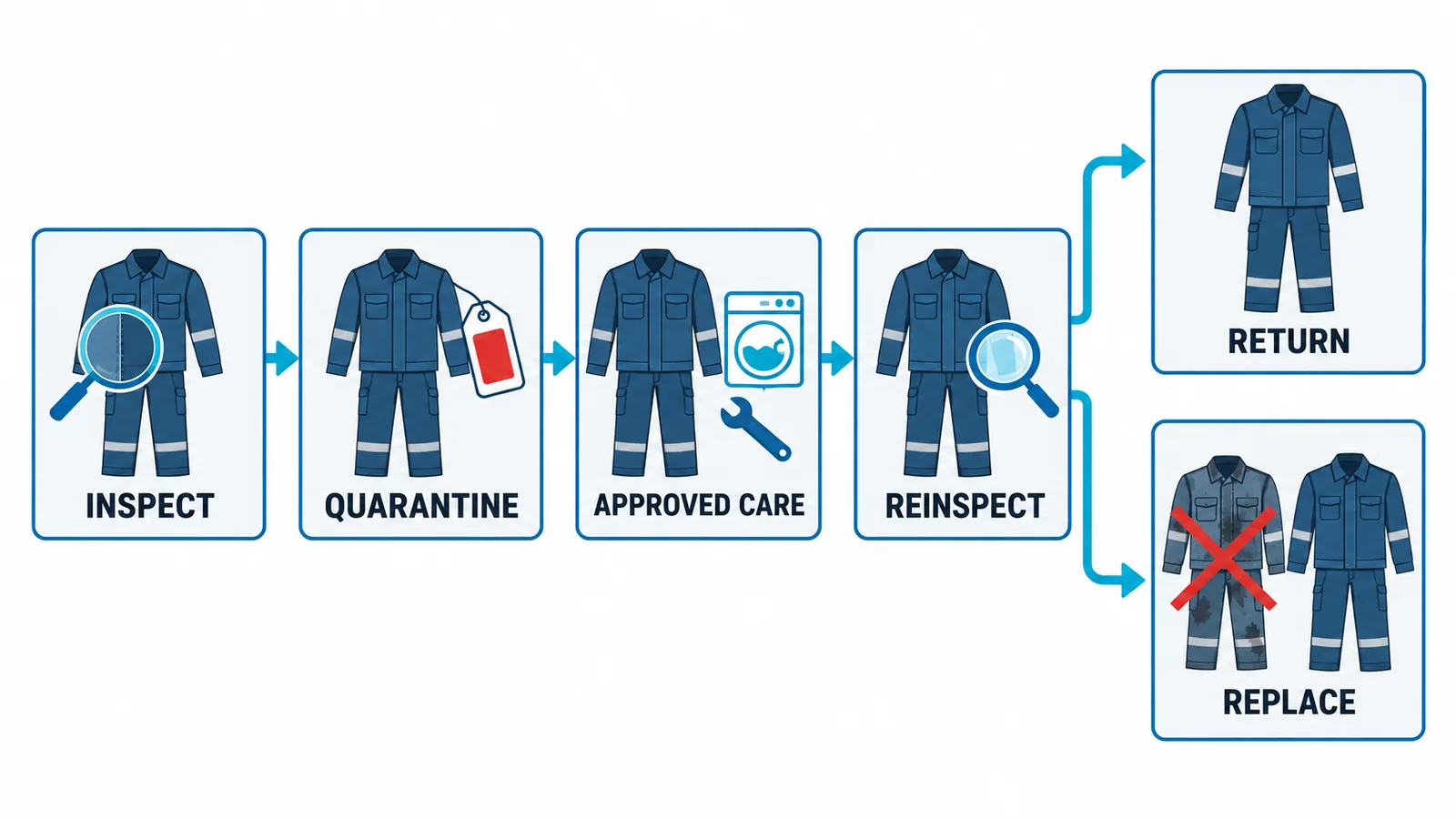
A usable return-to-service sequence
- Remove and tag the questionable item; keep it out of the usable-PPE store.
- Record the observed defect or contamination, not an assumed cause.
- Consult the exact item’s instructions and the employer’s care/repair policy.
- Use only an authorized cleaning or repair route. If none exists or it fails, replace.
- Reinspect the whole item, markings and fit; document the authorized disposition.
The safest outcome is not “keep PPE as long as possible.” It is to keep only PPE whose required rating, condition and suitability can be supported for the actual task.