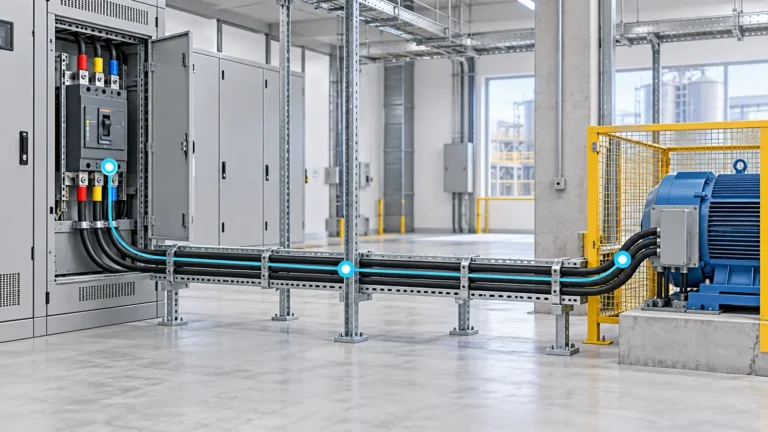
Wiring, Cables & Busbars
Cable Sizing for Circuit-Breaker-Protected Feeders: Six Verification Gates
For an LV feeder protected by a circuit breaker, choose a cable whose corrected current-carrying capacity covers the load and the breaker’s…

OHELE topic hub
Conductor sizing, cable systems, busbars, terminals, joints and panel wiring.
This hub follows the complete current path: conductor sizing, cable construction and installation, terminations, busbars, joints and panel wiring. Start with feeder cable sizing and circuit-breaker coordination, then move into the group that matches the component or verification question. Selection guides separate conductor ratings, installation conditions, accessory compatibility, thermal effects and short-circuit duty. No single catalogue dimension proves interchangeability.
Wiring, Cables & Busbars
For an LV feeder protected by a circuit breaker, choose a cable whose corrected current-carrying capacity covers the load and the breaker’s…
Cable size depends on the expected current, installation method, ambient and grouping conditions, voltage drop, protective-device behaviour, short-circuit withstand and applicable installation rules. The largest requirement from those checks can govern the final selection.
Compare the complete current path, including conductivity, required cross-section, mass, support, joint system, thermal expansion, environment, losses and fabrication. A conductivity ratio alone does not establish equivalent ampacity or a safe connection.
The block must match conductor type and size, voltage and current duty, connection function, rail space, accessories, environmental conditions, approvals and the panel's short-circuit context. The installation must also remain accessible for inspection and maintenance.
Only when the terminal product, conductor combination and installation are explicitly suitable and approved for that arrangement. A terminal that visually accepts two wires does not prove that the connection is rated, tested or compliant.
Busbar can provide a compact, high-current distribution path with predictable support and jointing. Cable can be more flexible in routing and connection. The choice depends on current, fault level, space, enclosure, maintenance, voltage drop and installation requirements.
Newest first
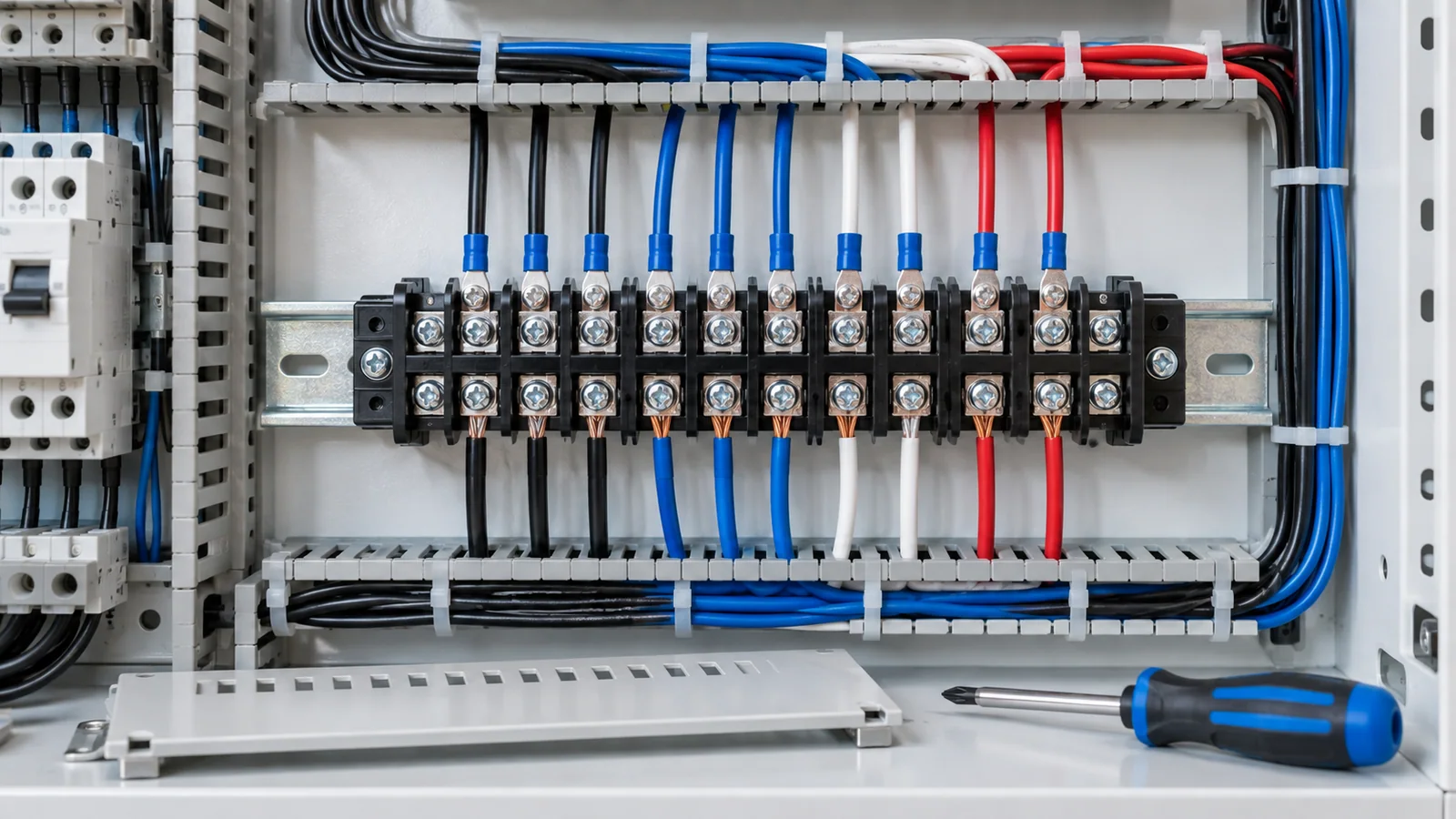
Install a barrier terminal block only after confirming the circuit ratings, accepted conductor and lug types, required spacing, enclosure conditions, hardware stack, strip length and tightening torque from…
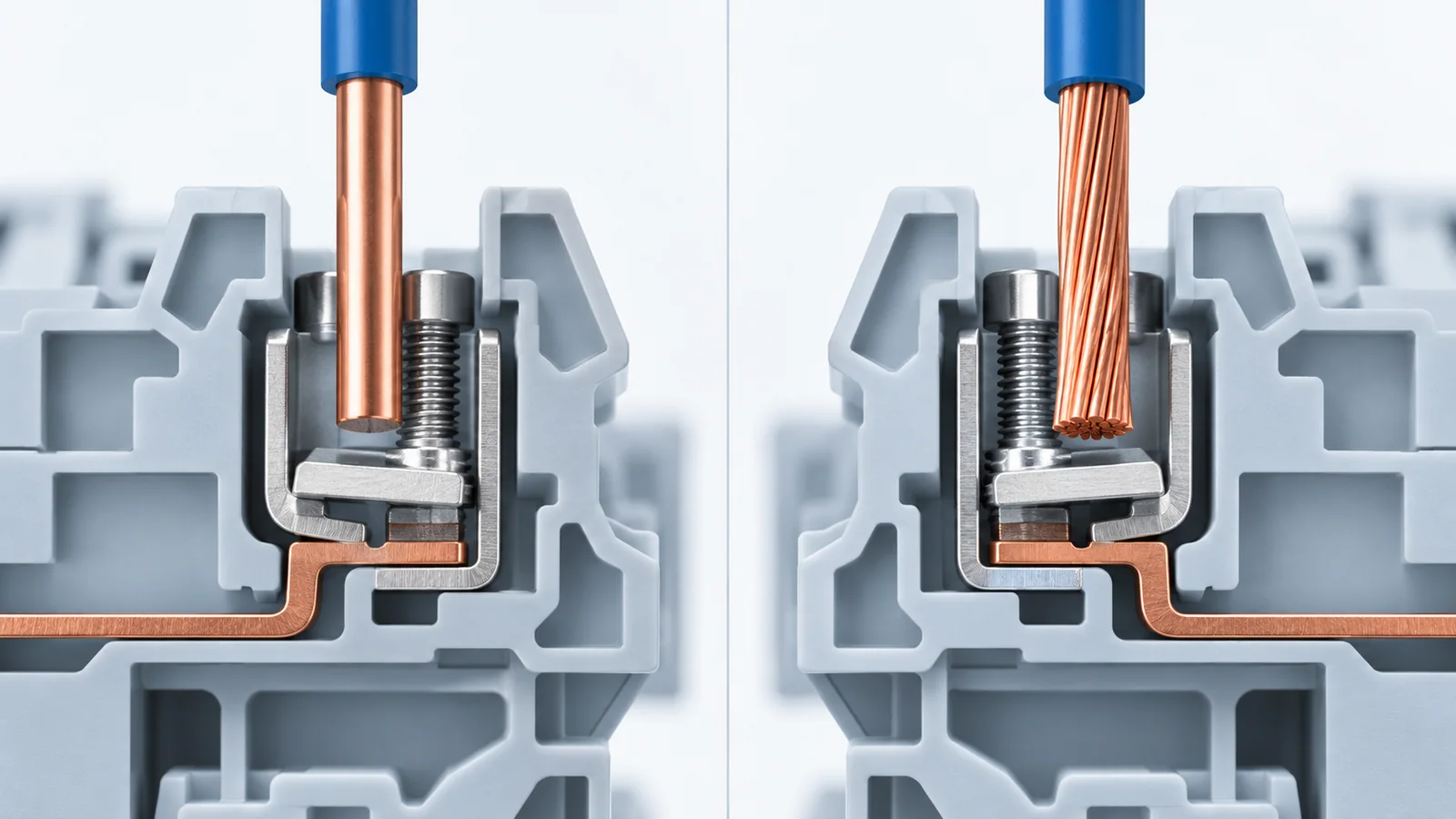
Use solid wire in a terminal block when the terminal explicitly accepts the conductor size and the installed wire will remain essentially static. Choose stranded or flexible wire…
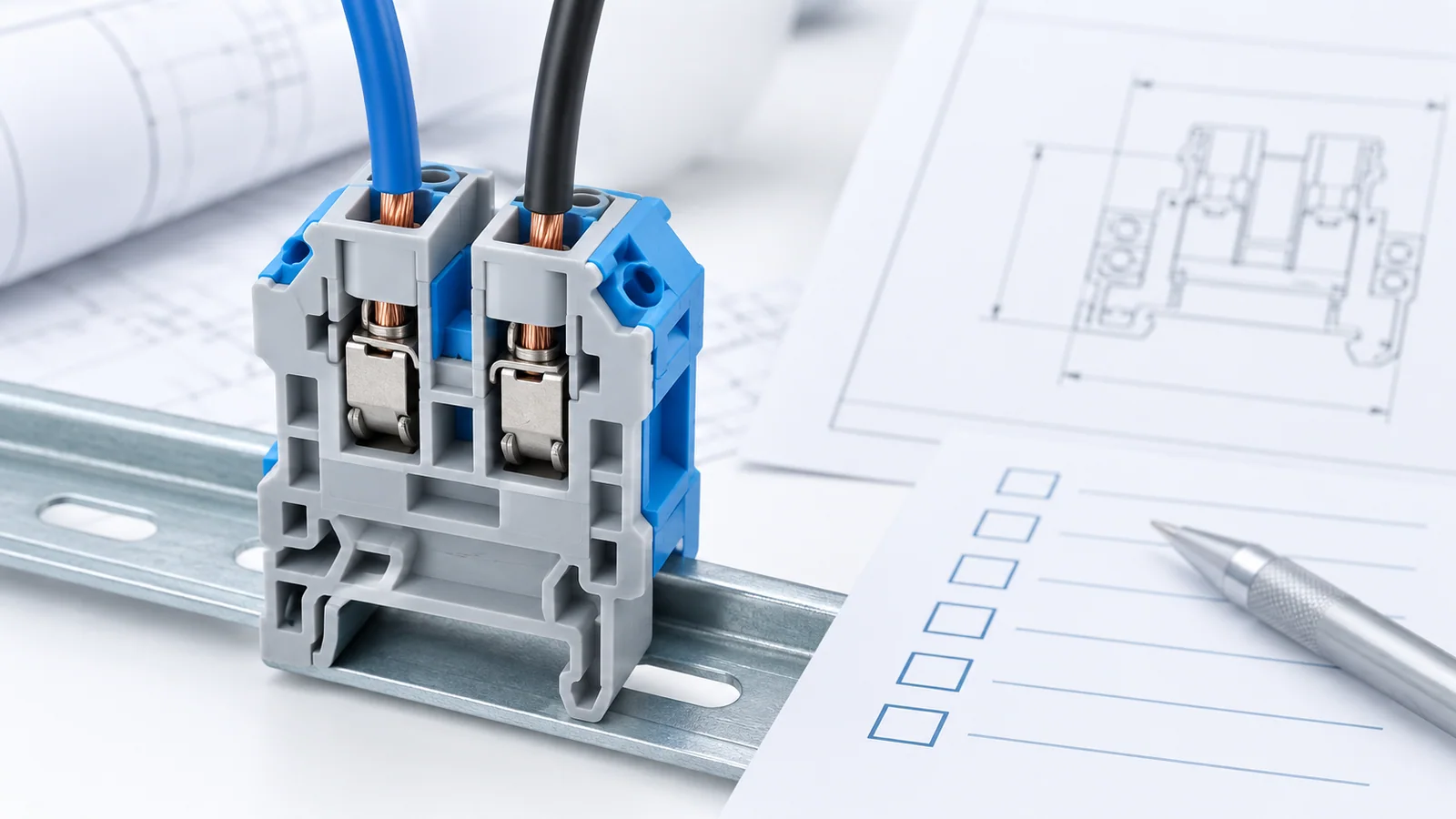
A UL Recognized terminal block is a component evaluated for use inside a larger end product under stated conditions. It does not, by itself, make an industrial control…
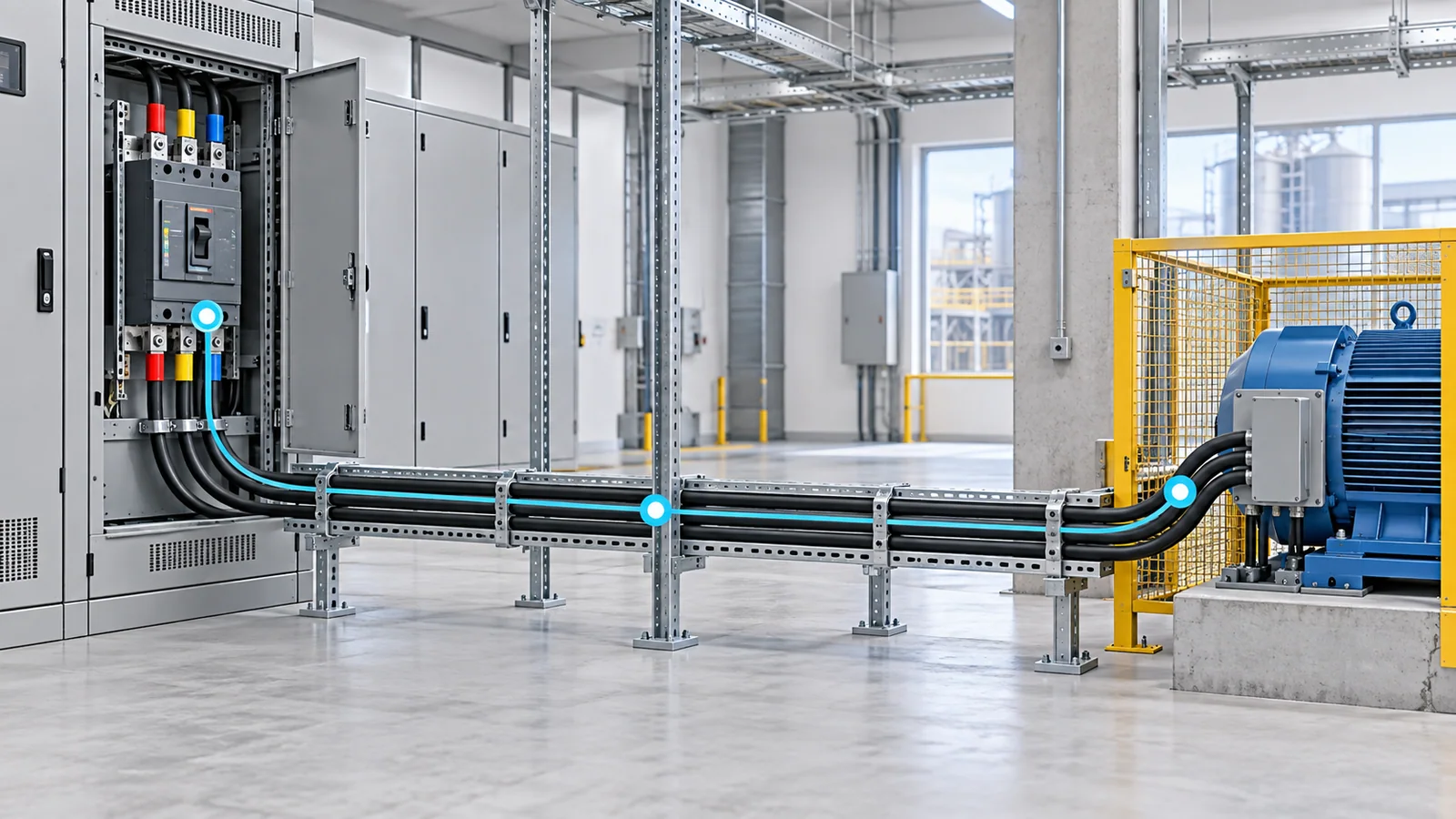
For an LV feeder protected by a circuit breaker, choose a cable whose corrected current-carrying capacity covers the load and the breaker’s effective overload setting. Then verify voltage…
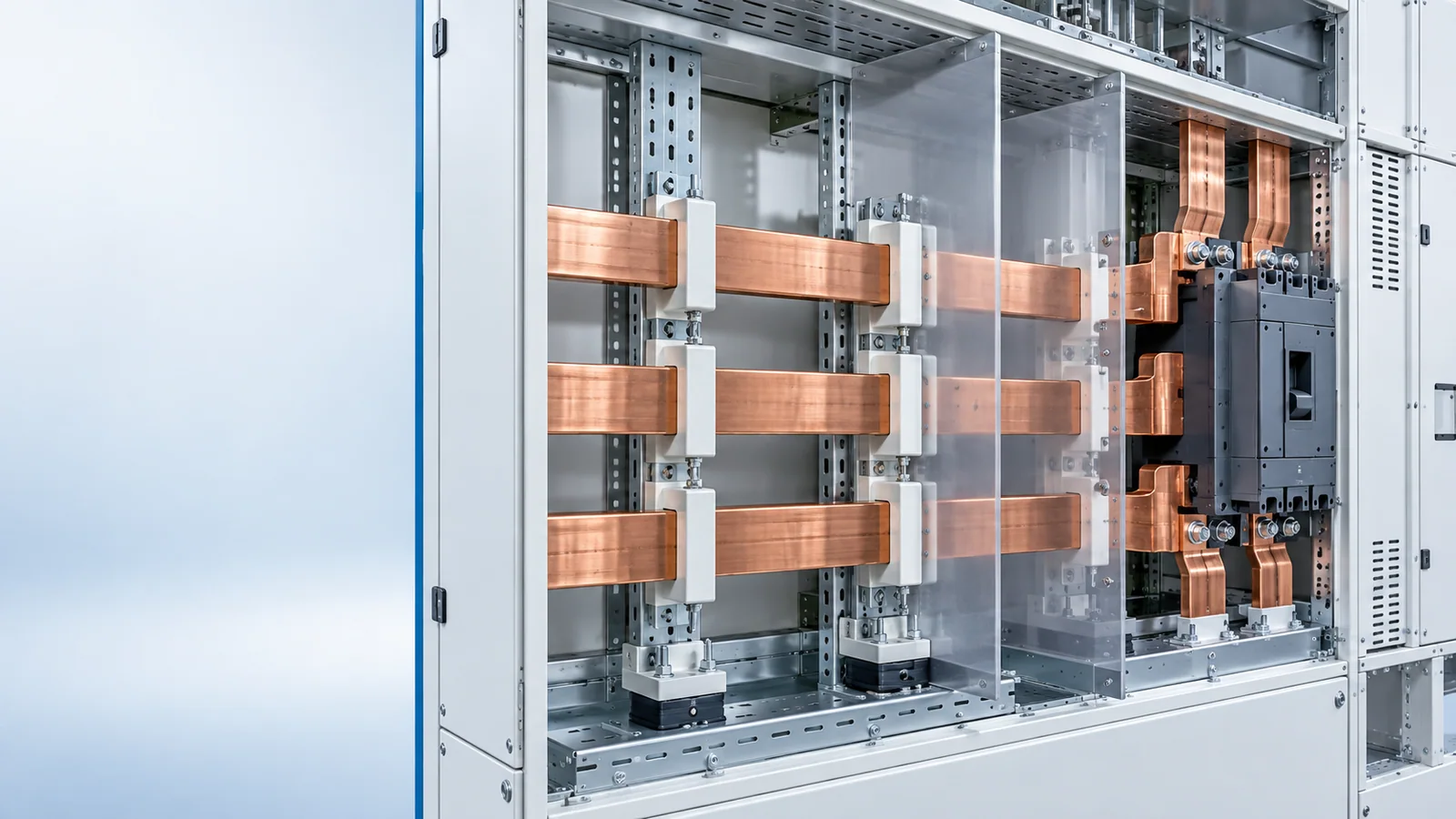
To size a busbar for compact low-voltage switchgear, choose a preliminary copper area from the continuous current, calculate hot conductor and connection losses, place those losses in the…
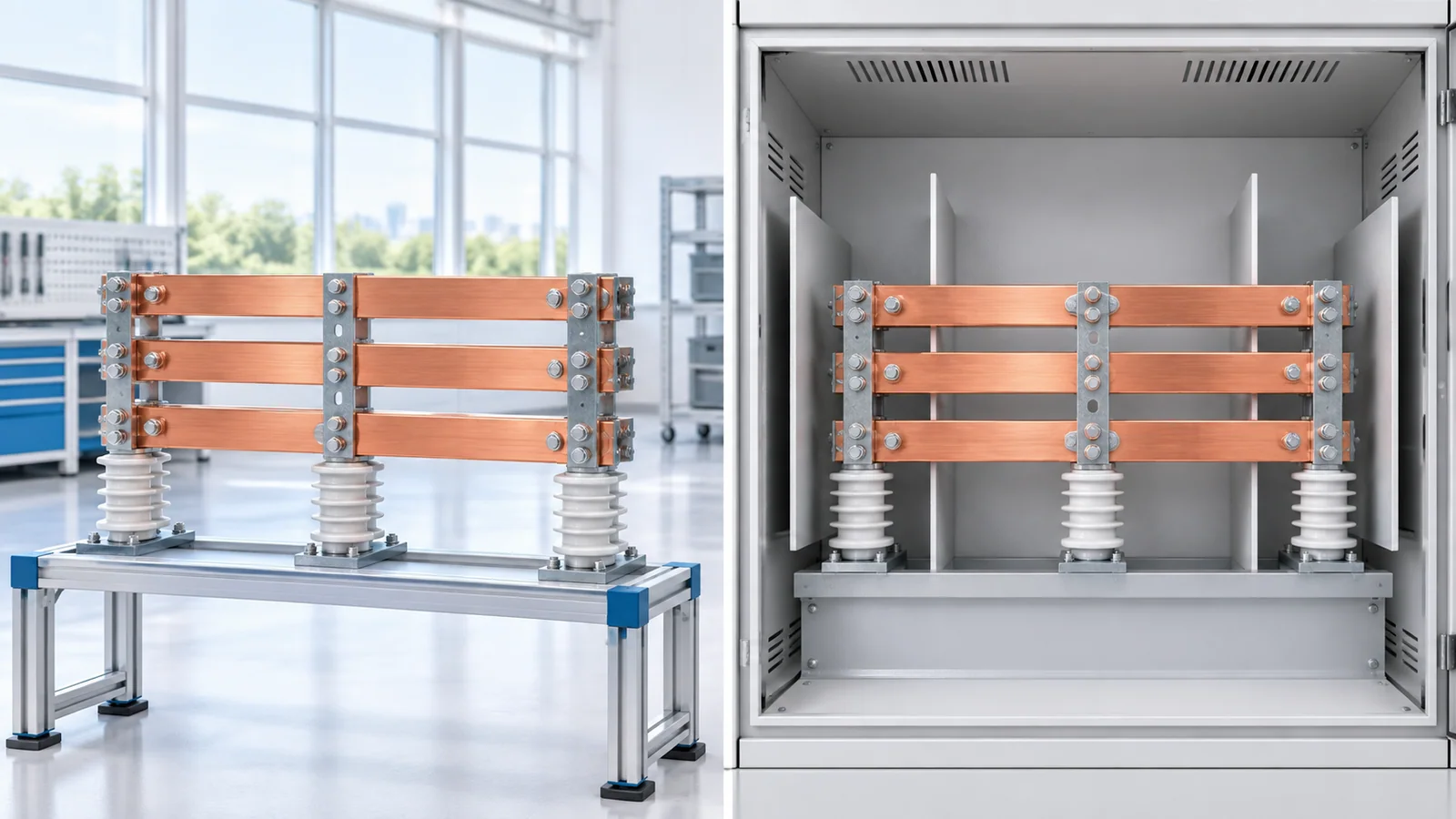
There is no universal copper busbar ampacity table. A current value is meaningful only with the bar dimensions and orientation, number of bars per phase, spacing, ambient temperature,…

An electrical busbar price is meaningful only when the electrical duty, material, dimensions, finish, fabrication, verification, and delivery basis are defined. A quote for a plain copper bar…
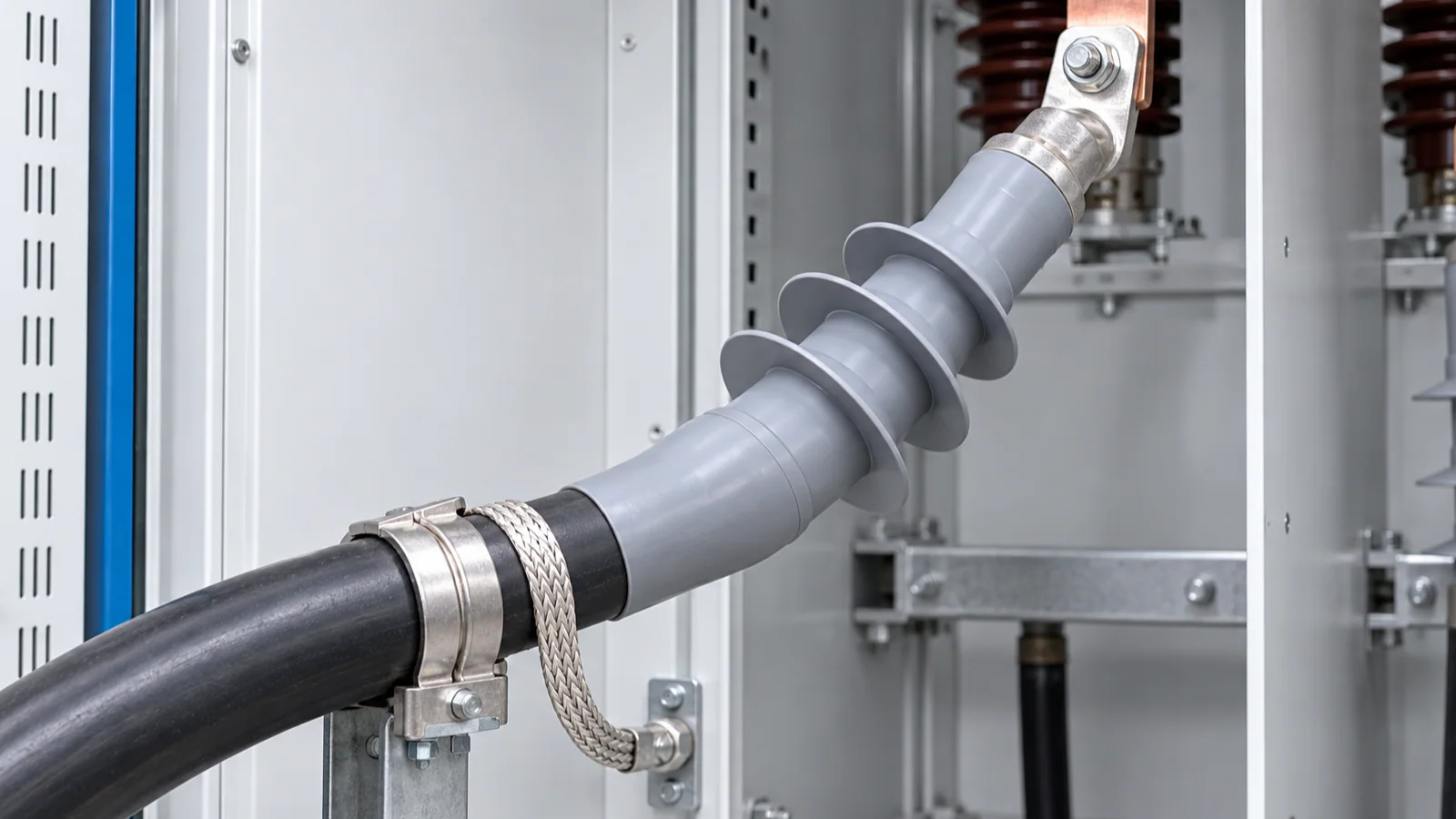
For medium-voltage (MV) cable terminations, the first place to investigate is usually the transition between the shielded cable and the connected equipment—not the bulk cable insulation in isolation.…